
Vehicle Repossession During FR-44: Protecting Your Florida Coverage
Free to compare
How Vehicle Repossession Triggers FR-44 Lapse in Florida
When a lender repossesses your financed vehicle in Florida, they immediately cancel the comprehensive and collision coverage required by your loan agreement. Your FR-44 carrier receives this cancellation notice from the lienholder and faces a choice: continue your policy with liability-only coverage or cancel the entire policy because the vehicle securing the policy no longer exists in your possession.
Most non-standard carriers — the Bristol Wests, Direct Autos, and Dairylands writing FR-44 policies — cancel the entire policy within 24 to 48 hours of lienholder notification. The moment your policy cancels, Florida law requires your carrier to file an SR-26 form with the state notifying them your FR-44 coverage has lapsed. The state processes this electronically, and your license suspension typically posts within three to five business days.
You receive no advance warning from the state. The first notification most drivers receive is a suspension letter arriving seven to ten days after the repo, by which time you've already been driving on a suspended license. If stopped during this window, you're facing a new criminal charge for driving while license suspended, which extends your FR-44 requirement and adds potential jail time in some Florida counties.
Why Paying Your Insurance Bill Doesn't Protect You
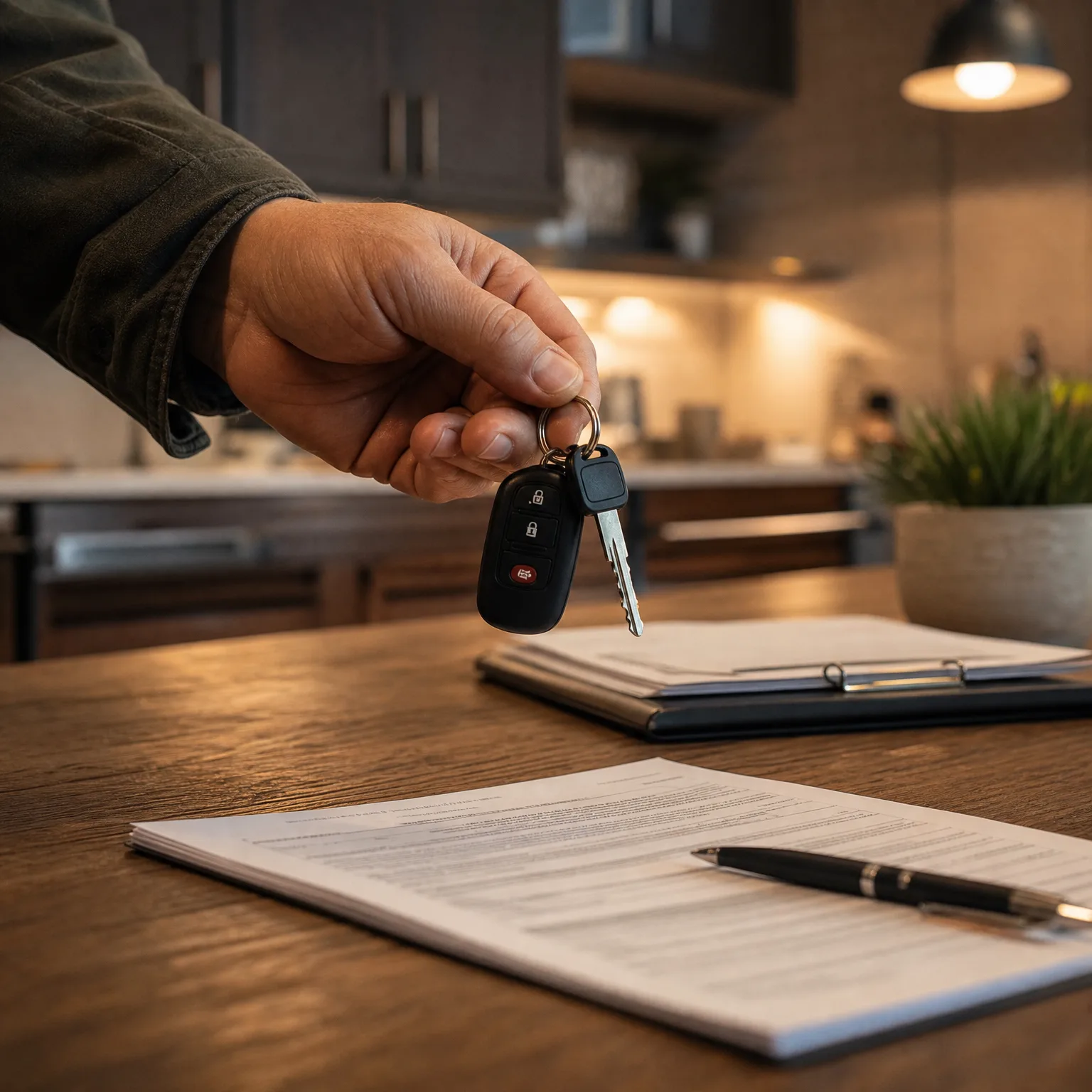
The confusion happens because your insurance payment and your vehicle loan payment are separate obligations tracked by separate systems. You can be current on every insurance premium — never missing a single payment to your FR-44 carrier — and still experience an FR-44 lapse the day your vehicle is repossessed.
Your carrier doesn't cancel because you failed to pay them. They cancel because the financed vehicle listed on your policy declaration page no longer meets the lienholder's coverage requirements, and continuing liability-only coverage on a vehicle you no longer possess creates underwriting exposure most non-standard carriers won't accept. The policy was written assuming you'd maintain both liability and physical damage coverage for the full term. Remove the physical damage portion mid-term, and the policy structure collapses.
Florida Statutes Section 324.023 requires continuous FR-44 coverage on any vehicle you own or regularly operate during your three-year filing period. The statute makes no exception for financial hardship, vehicle repossession, or unintentional coverage gaps. A single day without active FR-44 coverage resets your three-year clock from the date you reinstate, adding months or years to your compliance period.


The 10-Day Window to Prevent License Suspension
Florida gives you exactly 10 calendar days from the date your FR-44 policy cancels to secure replacement coverage and file a new FR-44 certificate with the state. This is not 10 business days — weekends and holidays count against you. Miss this window by even one day, and your license suspends automatically with no hearing, no warning, and no administrative appeal available until after suspension.
The clock starts the day your carrier files the SR-26, not the day you receive notice. If your policy cancels on a Monday due to vehicle repossession, your carrier files the SR-26 electronically that same day or the next business day. Your 10-day reinstatement window closes the following Thursday or Friday. The suspension letter the state mails typically arrives after this window has already closed.
To meet this deadline, you need replacement FR-44 coverage bound and the new certificate filed with Florida DHSMV before day 11. This means securing a quote, paying the full six-month premium up front (most non-standard carriers won't write month-to-month policies), and confirming electronic filing — all within a week of losing your vehicle. Most drivers learn about the cancellation too late to meet this timeline, which is why post-repossession FR-44 lapses account for roughly 15 to 20 percent of all FR-44 violations in Florida according to state reinstatement data.
Getting FR-44 Coverage Without a Vehicle After Repossession
Florida allows non-owner FR-44 policies for drivers who don't own a vehicle but need to maintain their filing requirement. This is your primary path forward after repossession if you can't immediately replace the vehicle or secure financing for another car.
A non-owner FR-44 policy provides liability coverage at Florida's required 100/300/50 minimums when you drive a vehicle you don't own — a borrowed car, a rental, or a vehicle you're test-driving. It maintains your FR-44 filing with the state, preventing license suspension and keeping your three-year clock running. Premiums typically range from $90 to $180 per month through non-standard carriers, roughly 40 to 60 percent less than owner-occupied FR-44 policies because there's no comprehensive or collision exposure.
Securing a non-owner policy immediately after repossession is time-critical. Most carriers can bind coverage and file the FR-44 certificate electronically within 24 to 48 hours if you apply online or by phone with payment in full. State processing adds another one to two business days. If you're on day seven or eight of your 10-day window when you discover the lapse, overnight expedited filing services are available through some carriers for an additional $25 to $50 fee, but this isn't guaranteed to beat the suspension deadline.

Meet Your FR-44 Requirement Without Overpaying
Get FR-44 Insurance Coverage
What Happens If Your License Suspends Before You Get New Coverage
Once your license suspends for FR-44 lapse, Florida requires formal reinstatement before you can legally drive again. This process requires paying a $150 reinstatement fee to DHSMV, securing new FR-44 coverage, filing the FR-44 certificate, and waiting for state confirmation — a process taking five to seven business days under normal circumstances and two to three weeks during high-volume periods.
The suspension also resets your three-year FR-44 requirement clock. Florida measures the three-year period from your reinstatement date, not your original conviction date. If you were 18 months into your requirement when the lapse occurred, you're now starting over at month zero. A vehicle repossession that causes a 30-day coverage gap can add 18 months to your total FR-44 compliance period.
Driving during suspension — even if you weren't aware your license had suspended — is a criminal offense in Florida. First offense carries up to 60 days in jail and a $500 fine under Florida Statutes 322.34. Second offense within five years becomes a first-degree misdemeanor with up to one year in jail. If stopped during a post-lapse suspension period, you're also facing a potential vehicle impoundment, which creates a circular problem if you've just secured replacement transportation.
Preventing Lapse When You Know Repossession Is Coming
If you're behind on vehicle payments and repossession is likely within the next 30 to 60 days, securing a non-owner FR-44 policy before the repo happens gives you continuous coverage and avoids the 10-day reinstatement scramble. You can carry both an owner policy on your financed vehicle and a non-owner policy simultaneously — the non-owner policy acts as backup the moment your primary policy cancels.
This approach costs roughly $500 to $900 for a six-month non-owner policy paid up front, which is substantial if you're already facing financial hardship. But compare that cost against the alternative: $150 reinstatement fee, 18 additional months of FR-44 premiums because your clock resets, potential criminal charges if you drive during suspension, and the employment consequences if your job requires a valid license.
Contact your current FR-44 carrier before the repossession occurs and ask whether they'll convert your policy to non-owner status the day the vehicle is taken. Some carriers will make this conversion without requiring a new application or underwriting review, maintaining continuous coverage and preventing the SR-26 lapse notification. Others refuse and will cancel outright, requiring you to secure replacement coverage independently. Knowing your carrier's policy gives you time to arrange backup coverage before the 10-day window opens.
Why Major Carriers Won't Write Post-Repossession FR-44 Policies
State Farm, Geico, Allstate, and Progressive generally won't write new FR-44 policies for drivers who've experienced a vehicle repossession within the past 12 months. Repossession signals financial instability and payment risk, and these carriers already restrict FR-44 eligibility to existing customers with clean payment histories. A driver coming off a repo rarely qualifies under their underwriting guidelines.
This forces you into the non-standard market: Bristol West, Direct Auto, Dairyland, GAINSCO, The General, Safe Auto, Acceptance, and Mendota. These carriers specialize in high-risk drivers and accept repossession histories, but they price for the risk. Expect non-owner FR-44 premiums in the $110 to $180 per month range, with full six-month payment required at binding. Month-to-month payment plans are rare in this market segment.
Some non-standard carriers also require an Ignition Interlock Device notation on your FR-44 filing if your original DUI conviction involved a BAC above .15 or a refusal. If you've already completed your IID requirement and had the device removed, the carrier may still require proof of completion and a letter from your DUI program before binding coverage. Gather these documents before you start shopping — waiting for paperwork while your 10-day window closes is how drivers end up suspended.
Frequently Asked Questions
Can I get FR-44 insurance in Florida if I don't own a car after repossession?
Yes, Florida allows non-owner FR-44 policies that provide liability coverage when you drive vehicles you don't own. These policies maintain your state filing requirement and prevent license suspension even without a vehicle in your name. Premiums typically run $90 to $180 per month through non-standard carriers.
How long do I have to get new FR-44 coverage after my car is repossessed in Florida?
Florida gives you 10 calendar days from the date your FR-44 policy cancels to secure replacement coverage and file a new certificate with the state. Miss this deadline by even one day and your license suspends automatically. The clock starts when your carrier files the SR-26 lapse notification, not when you receive notice from the state.
Does vehicle repossession reset my three-year FR-44 requirement in Florida?
Yes, if the repossession causes an FR-44 coverage lapse that leads to license suspension. Florida measures your three-year requirement from your reinstatement date, not your conviction date. A coverage gap that forces reinstatement resets your clock to day zero, potentially adding 18 to 24 months to your total compliance period.
Will my FR-44 carrier notify me before canceling my policy after repossession?
Most non-standard carriers cancel within 24 to 48 hours of receiving lienholder notification and are not required to provide advance notice to you before filing the SR-26 with the state. You typically learn about the cancellation from a state suspension letter that arrives after your 10-day reinstatement window has closed.
Can I keep my FR-44 active by switching to liability-only coverage after my car is repossessed?
Most non-standard FR-44 carriers will not convert a financed-vehicle policy to liability-only mid-term after repossession. They cancel the entire policy because the vehicle securing the original policy no longer exists in your possession. You need to secure a separate non-owner FR-44 policy to maintain continuous coverage and avoid license suspension.
Related Articles

Florida FR-44: Higher Limits After a DUI
4/16/2026
Vehicle Repossession During FR-44: License Impact
4/27/2026

Missed FR-44 Payment in Florida: Lapse Rules & Costs
4/27/2026

FR-44 Disqualification for Unpaid Premiums in Florida
4/27/2026

FR-44 Lapse After Selling Your Car in Florida
4/27/2026

Multiple FR-44 Lapses Extend Filing Period in Florida
4/27/2026