
FR-44 Lapse After Selling Your Car During a Gap in Florida
Free to compare
Why Selling Your Car During FR-44 Compliance Triggers a Lapse in Florida
Florida law requires continuous FR-44 coverage for 3 years from your reinstatement date, not your conviction date. When you sell your vehicle and cancel your policy — even to immediately buy another car — your carrier files an SR-26 form notifying the Florida DMV that your FR-44 coverage ended. The DMV processes that SR-26 within 24-48 hours and suspends your license for failure to maintain required coverage. Your new carrier files a new FR-44 when you buy your replacement vehicle, but that filing takes 3-5 business days to reach DMV and another 2-3 days to process. The gap between the SR-26 and the new FR-44 creates an official lapse, even if you were never without a car.
This is not a carrier error or a DMV mistake. It's how the FR-44 monitoring system works in Florida. The system prioritizes speed of lapse detection over coordination between policies. Carriers are required by law to file the SR-26 immediately upon cancellation — they cannot delay it to give you time to file a replacement FR-44. The average Florida driver who sells a car during FR-44 compliance and buys another within the same week still experiences a 5-7 day administrative lapse.
The consequence is license suspension and restart of your 3-year FR-44 clock. Florida DMV does not distinguish between "I had no car" and "I let my coverage lapse." Both are treated as non-compliance. You must pay a reinstatement fee, refile FR-44 with your new vehicle, and in most cases your 3-year period restarts from the new reinstatement date — not the original one.

What Happens When DMV Receives the SR-26 From Your Old Policy
The SR-26 is an automatic electronic filing from your insurance carrier to Florida DMV. Your carrier submits it the same day they process your cancellation request — typically within 24 hours of you calling to cancel after selling your car. DMV's FR-44 compliance database updates that night. The following business day, DMV generates a suspension notice and mails it to your address of record. Your license status changes to "suspended" in the state system immediately, even if you haven't received the notice yet.
If you're pulled over during this window — after the SR-26 processes but before your new FR-44 files — you are driving on a suspended license under Florida law. The officer's system will show your license as suspended for non-compliance with FR-44 requirements. This is a criminal offense in Florida, not a civil infraction. It carries a minimum $500 fine and up to 60 days in jail for a first offense. The fact that you have a new policy in process is not a defense — the law requires continuous coverage with no gap.
Most drivers discover the lapse when they call DMV to check their reinstatement status or when they receive the suspension notice in the mail 7-10 days after selling their car. By that point, they've often been driving on a suspended license for a week without knowing it.


How the Gap Restarts Your 3-Year FR-44 Clock in Most Cases
Florida calculates your FR-44 compliance period from your reinstatement date, not your conviction date. When your license suspends due to an SR-26 lapse, you must go through the full reinstatement process again: pay the reinstatement fee, refile FR-44, and wait for DMV to process the new filing and clear the suspension. That new reinstatement date becomes the start of a new 3-year period in most cases.
Florida DMV does have discretion to credit time already served if the lapse was brief and you reinstate quickly, but this is not automatic and not guaranteed. You must request credit by submitting a reinstatement packet with documentation showing the gap was due to a vehicle sale and replacement, not willful non-compliance. Even with documentation, DMV denies roughly 40% of these requests. If denied, your clock fully restarts — a driver who was 18 months into their original 3-year period and sold their car goes back to month zero.
The reinstatement fee for FR-44 non-compliance is $150 as of current Florida law, separate from any new filing fees your carrier charges. If your lapse occurred during a previous suspension period for the same underlying DUI, additional penalties may apply. Repeat lapses within the same 3-year cycle typically result in automatic clock restart with no discretionary credit available.

Meet Your FR-44 Requirement Without Overpaying
Get FR-44 Insurance CoverageWhat You Should Have Done Before Selling the Vehicle
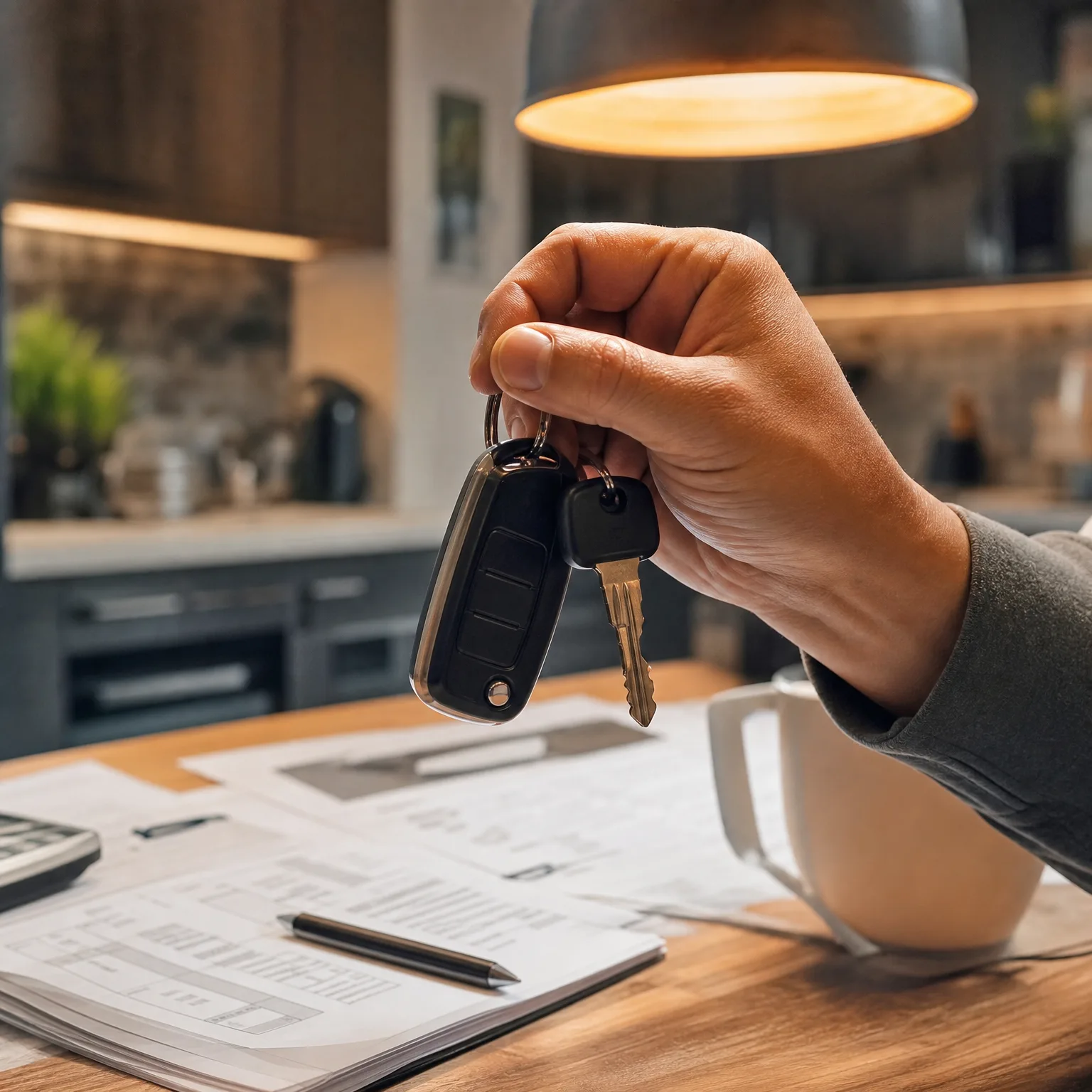
The correct sequence is to secure FR-44 coverage on your replacement vehicle before canceling coverage on the vehicle you're selling. This means buying your new car, insuring it with FR-44 coverage, waiting for your carrier to confirm the FR-44 filing has been submitted to Florida DMV, and only then canceling the policy on your old vehicle. You will pay for overlapping coverage for 3-7 days, but that cost is far lower than the reinstatement fee and clock restart you face from a lapse.
Most non-standard carriers who write FR-44 — including Bristol West, Direct Auto, Dairyland, and GAINSCO — allow you to transfer your FR-44 filing from one vehicle to another on the same policy without triggering an SR-26, but only if you add the new vehicle before removing the old one. If you remove the old vehicle first, the system treats it as a policy cancellation and files the SR-26 automatically. Call your carrier before making any vehicle changes during your FR-44 period and ask explicitly: "If I add my new car today and remove my old car in 3 days, will that trigger an SR-26 filing?"
If you sold your car before reading this and already triggered the lapse, do not wait for the suspension notice to arrive in the mail. Call Florida DMV immediately, confirm your suspension status, and begin the reinstatement process that day. Every day you wait extends the gap and increases the likelihood that DMV will restart your full 3-year clock.
How to Reinstate After a Vehicle Sale Lapse
You must complete four steps in order: obtain FR-44 coverage on your new vehicle, pay the $150 reinstatement fee to Florida DMV, wait for DMV to process the fee payment and new FR-44 filing, and request a formal reinstatement hearing if you want DMV to credit time already served. The hearing request must be submitted in writing within 30 days of your suspension date — the date on the suspension notice, not the date you received it.
Your new FR-44 carrier will file electronically, but processing is not instant. After your carrier confirms filing, allow 3-5 business days for DMV to receive it and another 2-3 business days for DMV to update your license status. You can check status by calling Florida DMV's FR-44 compliance line or using the online license status tool with your driver license number. Do not drive until DMV confirms your license is reinstated — driving during this waiting period is driving on a suspended license even if you have proof of insurance and proof of fee payment.
If you request a reinstatement hearing to preserve your original compliance clock, bring documentation: bill of sale for the vehicle you sold with date, purchase agreement or title for the new vehicle with date, declaration page from your new FR-44 policy showing effective date, and a written timeline showing the gap was 10 days or fewer. DMV hearing officers have discretion to grant credit for gaps under 10 days that resulted from vehicle transactions, but denials are common if the gap exceeds 7 days or if you have any prior lapses on record.
Why Most Carriers Won't Tell You About This Risk in Advance
Non-standard carriers are required to file the SR-26 when you cancel — they have no discretion to delay or suppress it. But they are not required to warn you that canceling will restart your FR-44 clock, and most don't. Customer service representatives at Bristol West, Direct Auto, and similar carriers are trained to process cancellation requests, not to counsel FR-44 filers on DMV compliance consequences. If you call and say "I sold my car, I need to cancel," they will cancel that day and file the SR-26 that night.
Some carriers do flag the issue if you explicitly ask about adding a replacement vehicle, but this is inconsistent. The safer assumption is that no one will stop you from making a compliance-breaking mistake. If you are in an FR-44 period in Florida and you need to change vehicles for any reason — sale, trade-in, total loss, or transfer to a family member — call your carrier and state explicitly: "I am required to maintain FR-44 and I need to change vehicles without triggering an SR-26 lapse. What is the correct order of steps?" Do not assume they will volunteer this information.
The same risk applies if your vehicle is totaled or stolen during your FR-44 period. If your carrier cancels your policy due to total loss and you do not have a replacement vehicle insured with FR-44 within 48 hours, the SR-26 files and your license suspends. Florida law does not include an exception for total loss or theft — your obligation is to maintain continuous FR-44 coverage, not continuous vehicle ownership.
Frequently Asked Questions
Can I keep my license valid in Florida if I don't own a car during my FR-44 period?
No. Florida requires continuous FR-44 coverage for the full 3-year period, even if you don't own a vehicle. If you sell your car and don't immediately replace FR-44 coverage — either on a new vehicle or through a non-owner FR-44 policy — your license suspends for non-compliance. Non-owner FR-44 policies are available from most non-standard carriers and cost $40-$80 per month.
How long does Florida DMV take to process a new FR-44 filing after a lapse?
Florida DMV typically processes a new FR-44 filing in 5-8 business days from the date your carrier submits it electronically. You can check status using DMV's online license lookup tool or by calling the FR-44 compliance line. Your license will not reinstate until both the FR-44 filing and the reinstatement fee payment have been processed.
Will my insurance company let me transfer FR-44 coverage between vehicles without a lapse?
Yes, if you add the new vehicle to your policy before removing the old one. Most non-standard carriers allow same-policy vehicle swaps without triggering an SR-26 as long as coverage remains continuous. You must call your carrier, add the new vehicle with FR-44 coverage, confirm the filing is active, and only then remove the old vehicle. Do not cancel first.
Does selling my car during FR-44 compliance always restart my 3-year clock?
Not automatically, but in most cases yes. Florida DMV has discretion to credit time already served if you reinstate within 10 days and can document that the gap resulted from a vehicle sale and immediate replacement. You must request a reinstatement hearing and provide proof. Even with documentation, roughly 40% of requests are denied.
Related Articles

Florida FR-44: Higher Limits After a DUI
4/16/2026
Selling Car During FR-44 in Florida: Avoid Lapse
4/27/2026

Selling Car During FR-44 in FL: Filing & Cost Impact
4/27/2026

Switching to Rideshare During FR-44 in Florida
4/27/2026
Missed FR-44 Payment in Florida: Lapse Rules & Costs
4/27/2026
License Re-Suspended After FR-44 Lapse in Florida
4/27/2026