
Commercial Driver With Multiple Vehicles FR-44 in Florida: What Works
Free to compare
Does FR-44 Apply to All Your Vehicles or Just One?
The FR-44 filing attaches to your driver's license in Florida, not to individual vehicles. You need one FR-44 certificate on file with the state covering at least one policy that meets Florida's 100/300/50 minimum liability requirements. If you own three vehicles and insure all three under a single policy, that one FR-44 filing covers your compliance obligation.
The problem surfaces when you try to insure multiple vehicles as a commercial driver with an FR-44 requirement. Most non-standard carriers that accept FR-44 filers — Bristol West, Direct Auto, GAINSCO, Safe Auto — price commercial use or multiple vehicles out of range or decline the risk entirely. Standard carriers like State Farm or Progressive may file FR-44 for existing customers but typically non-renew at the end of the policy term if you're operating commercially or carry multiple vehicles.
This creates a split coverage scenario: you maintain one personal-use policy with FR-44 filing on the vehicle you were driving when convicted, and you secure separate commercial or fleet coverage for your work vehicles. The commercial policy doesn't need FR-44 filing. The personal policy does. You're compliant as long as the FR-44-bearing policy remains active and the state receives no SR-26 lapse notification from your insurer.
Why Non-Standard Carriers Won't Write Multi-Vehicle FR-44 Policies
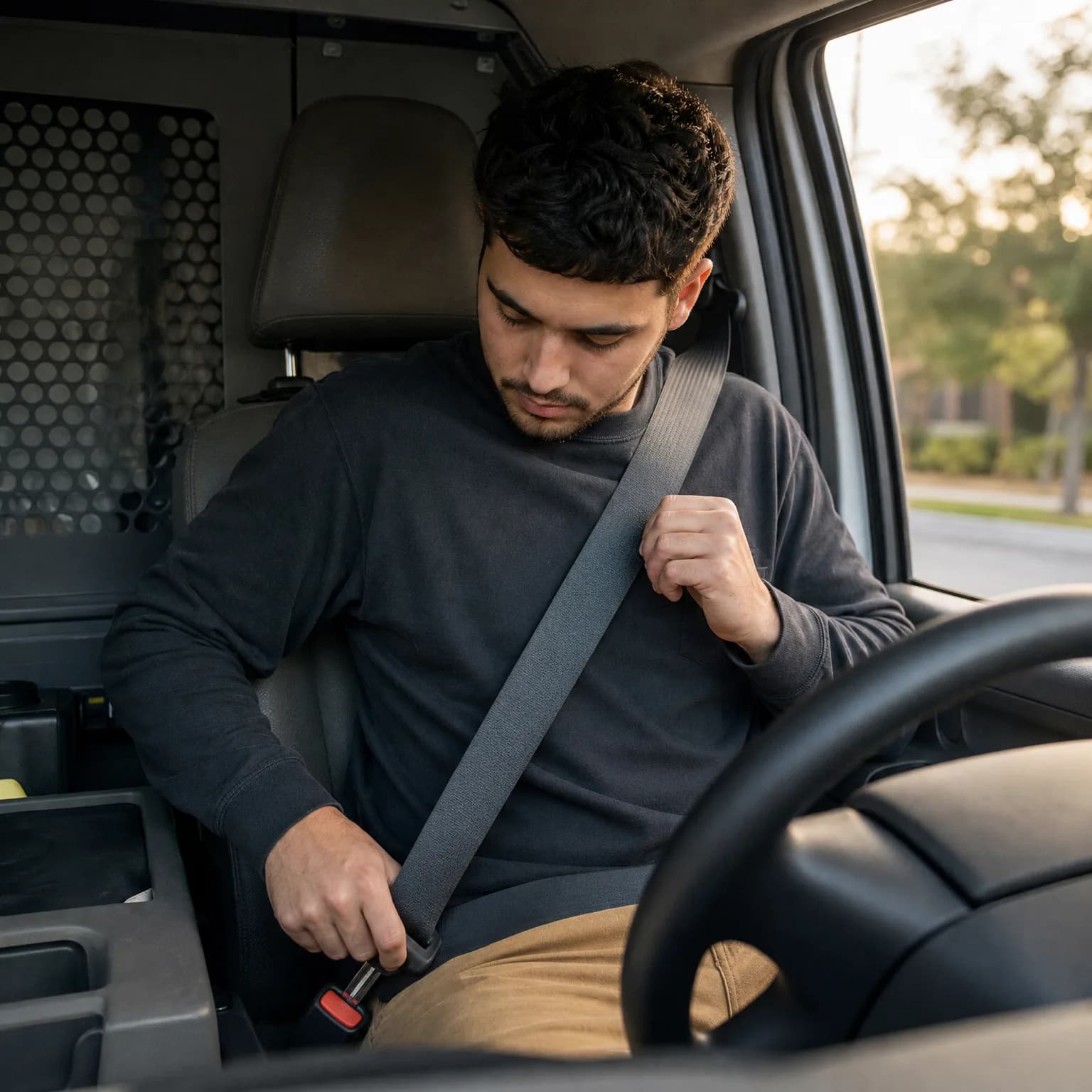
Non-standard carriers underwrite FR-44 filers as high-risk, single-vehicle risks. Adding a second or third vehicle increases loss exposure beyond their appetite, and adding commercial use — delivery driving, ride-share, contractor travel — compounds it. GAINSCO and Bristol West, two of the larger FR-44 writers in Florida, typically cap coverage at one personal-use vehicle per FR-44 policy.
Carriers also price FR-44 policies assuming limited annual mileage. Commercial drivers routinely exceed 15,000 to 20,000 miles per year. That mileage increase alone can trigger a declination or a premium 40% to 60% higher than the already-elevated FR-44 base rate. If you operate a pickup truck for a contracting business and a personal sedan, expect the combined premium on a single policy to exceed $500 to $700 per month in most Florida metro areas, if the carrier writes it at all.
The alternative — splitting coverage between a personal FR-44 policy and a separate commercial policy — is not a workaround. It's the standard practice for commercial drivers in FR-44 compliance. The state doesn't require FR-44 on every policy you hold. It requires continuous FR-44 coverage on at least one policy that meets state minimums.

How to Structure Split Coverage Without Triggering a Lapse
Maintain your FR-44 filing on the vehicle you drive most for personal use — the car you were driving at the time of the DUI conviction or breath-test refusal. Secure that policy first. Confirm the carrier has transmitted the FR-44 certificate to the Florida Department of Highway Safety and Motor Vehicles before your court or DMV deadline.
Once the FR-44 policy is active and confirmed, secure commercial coverage separately. Look for commercial auto carriers that write contractors, delivery drivers, or small fleet operators: Progressive Commercial, Hiscox, The Hartford, or regional Florida carriers like Florida Specialty Insurance or Preferred Mutual. These carriers underwrite commercial risk independently. They don't care about your FR-44 requirement because the FR-44 filing isn't on their policy.
The failure mode to avoid: letting the FR-44 policy lapse while the commercial policy remains active. The state monitors only the FR-44-bearing policy. If that policy lapses or cancels for non-payment, the insurer files an SR-26 lapse notice with the state within 10 days. Your license suspends immediately. The commercial policy provides zero protection against that suspension because it doesn't carry the FR-44 filing. Set the FR-44 policy to autopay. Treat it as the non-negotiable policy in your coverage structure.

Meet Your FR-44 Requirement Without Overpaying
Get FR-44 Insurance CoverageWhat Happens if You Use the FR-44 Vehicle for Commercial Driving
If you use the vehicle covered by your FR-44 policy for commercial purposes — delivery, ride-share, contractor travel — and your policy excludes commercial use, any claim during commercial operation will be denied. Most personal auto policies exclude coverage for business use. The FR-44 filing doesn't change that exclusion.
You have two options. First, add a commercial use endorsement to your FR-44 policy if the carrier offers it. Endorsement availability varies by carrier and significantly increases premium — expect an additional $100 to $200 per month. Bristol West and Direct Auto occasionally offer commercial endorsements for light delivery or contractor use. State Farm and Progressive may offer them to existing customers but rarely to new FR-44 filers.
Second, stop using the FR-44 vehicle for commercial purposes. Use it only for personal driving. Operate your commercial vehicle under the separate commercial policy. This segregation eliminates the coverage gap. If you're in an at-fault accident while working, the commercial policy responds. If you're in an at-fault accident while running personal errands in the FR-44 vehicle, the personal policy responds. No overlap, no exclusion risk.
The state does not require you to disclose what you do for work when maintaining FR-44 compliance. It requires proof of continuous liability coverage at 100/300/50 limits. How you use the vehicle day-to-day is a matter between you and your insurer, governed by your policy terms.
Can You Remove a Vehicle from the FR-44 Policy After the First Year?
Yes, but only if you maintain at least one vehicle on the FR-44 policy throughout the full three-year compliance period. Florida measures the compliance period from your reinstatement date, not your conviction date. If you were reinstated on March 1, 2023, your FR-44 requirement expires on March 1, 2026.
If you started FR-44 compliance with two vehicles on a single policy and you sell one vehicle or transfer it to a family member's policy after 12 months, the FR-44 filing remains active as long as one vehicle stays on the policy. The carrier doesn't re-file FR-44 when you remove a vehicle. The filing is continuous until you cancel the policy entirely or the carrier non-renews you.
The risk: if removing the second vehicle drops your premium below the point where the policy remains affordable and you later cancel for financial reasons, the lapse triggers an SR-26 and your license suspends. Removing vehicles mid-compliance is permitted, but don't do it to lower premium to a threshold you can't sustain. The three-year period is measured in calendar days, not policy changes.

What If You Move Between Florida Counties During Compliance
FR-44 compliance follows your driver's license, not your address. If you move from Miami-Dade County to Hillsborough County or from Orange County to Duval County during your three-year filing period, your FR-44 requirement doesn't reset and your compliance period doesn't change. Update your address with the Florida DHSMV within 10 days of moving — failure to update can result in a separate license suspension.
Your insurance premium will change. Rates vary significantly between Florida counties. A driver paying $280 per month for FR-44 coverage in Polk County may see rates increase to $400 per month after moving to Broward County due to higher uninsured motorist rates and claims frequency in South Florida metro areas. Contact your carrier before the move. If the new county rate is unaffordable, shop before you cancel your existing policy.
Some non-standard carriers don't write FR-44 coverage in all Florida counties. GAINSCO and The General write statewide. Bristol West and Safe Auto have county-level underwriting restrictions. If you move to a county your current carrier doesn't serve, they'll non-renew you at your next renewal date, not immediately. You have until that renewal date to secure replacement coverage and transfer the FR-44 filing to the new carrier.
Frequently Asked Questions
Do I need FR-44 on my work truck if I already have it on my personal car?
No. FR-44 attaches to your driver's license, not individual vehicles. You need one active FR-44 policy that meets Florida's 100/300/50 liability minimums. If you have FR-44 on your personal car and separate commercial coverage on your work truck, you're compliant as long as the personal policy with the FR-44 filing stays active.
What happens if my FR-44 carrier non-renews me because I added a second vehicle?
You have until your non-renewal date — typically 30 to 45 days from the notice — to secure replacement FR-44 coverage and transfer the filing to a new carrier. The state doesn't suspend your license immediately upon non-renewal notice. It suspends only if the policy lapses without replacement coverage in place.
Can I insure my commercial vehicle and my personal vehicle with the same carrier if I have FR-44?
Most non-standard FR-44 carriers won't write both on a single policy. They cap coverage at one personal-use vehicle. You'll need separate policies: one personal policy with FR-44 filing, one commercial policy without it. Progressive Commercial and The Hartford write commercial coverage independently and don't factor FR-44 status into commercial underwriting.
Does moving to a different Florida county restart my FR-44 three-year requirement?
No. Your FR-44 compliance period is measured from your reinstatement date and doesn't reset when you move within Florida. Update your address with the DHSMV within 10 days of moving, but your end date stays the same. Your premium will change based on the new county's rate environment.
Related Articles

Florida FR-44: Higher Limits After a DUI
4/16/2026
FR-44 + CDL in Florida: Dual-Policy Compliance Pitfalls
4/27/2026

Commercial Driver Multiple Vehicles FR-44 Florida
4/27/2026

FR-44 + CDL Commercial Cost in Florida: Real Numbers
4/27/2026

Rideshare Coverage with FR-44 in Florida: Policy Setup
4/27/2026

Disability During FR-44 in Florida: Policy Options
4/27/2026